


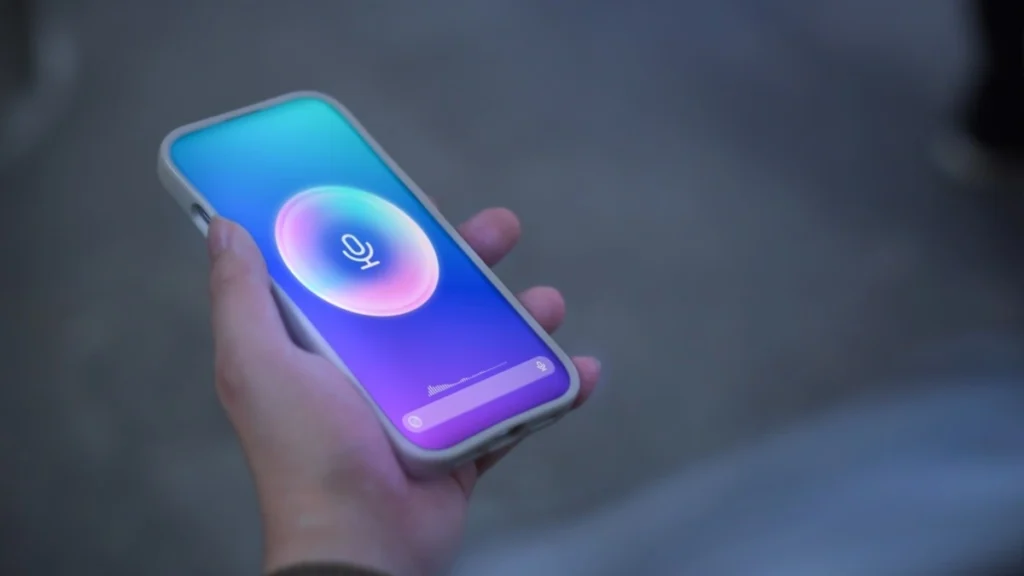
For years, asking Siri to do something could feel like talking to a very polite voice-controlled search box.
Ask it to set an alarm and it would. Ask it a question and, depending on the question, it might give you an answer, search the web or simply tell you it could not help.
That is supposed to change.
Apple has now released the next generation of Apple Intelligence, bringing a completely reworked version of Siri to its latest software. Apple describes the new Siri AI as more conversational, more aware of personal context and capable of taking actions across apps. Here’s how Apple describes the new Siri AI.
But what does that actually mean for someone using an iPhone?
Siri is no Longer Just Waiting for a Command
The biggest change is that Siri is being designed to understand more of the context behind a request.
Instead of simply responding to a single instruction, Siri AI can draw on information from across your device to help answer questions. Apple says it can surface relevant information from messages, emails, photos and other content when responding to a request.
That means you could ask Siri to find information about something you discussed with someone without necessarily remembering exactly where that conversation happened.
The old Siri largely depended on you knowing exactly what to ask. The new version is designed to understand what you mean and work with the information already available on your devices.
It Can See What is on Your Screen
Another major addition is onscreen awareness.
Siri AI can understand what you are currently looking at on your iPhone or iPad and use that information to help you.
Imagine someone sends you an address in a message. Instead of copying the address, opening Maps and entering it yourself, you could ask Siri to use the information on your screen.
Or you could be looking at a photo and ask Siri about what you are seeing.
Apple’s Siri AI user guide also highlights Siri’s ability to search through photos, Mail, Messages and your calendar, as well as use information on screen to help complete tasks.
This moves Siri closer to the way people increasingly expect AI assistants to work. The assistant is not simply hearing your voice. It has some understanding of the digital environment in which you are using it.
The Bigger Shift is That Siri Can Actually Do Things
Perhaps the most interesting part of the update is not what Siri can tell you, but what Apple says it can do for you.
Siri AI can perform actions across apps and, in some cases, interact with third-party apps.
Apple gives examples such as finding a recipe from an email and adding the ingredients to a grocery list. It can also help draft emails, edit and share photos, and carry out other actions across the apps you use.
That is a significant change in the role of a digital assistant.
Instead of:
“Tell me how to do this.”
The expectation becomes:
“Do this for me.”
That distinction is at the heart of the current shift towards AI agents. The technology is moving beyond answering questions and towards completing tasks.
Siri is Also Becoming More Conversational
Apple is also changing the way Siri communicates.
The new assistant is designed to handle more natural conversations and follow-up questions, rather than treating every request as an isolated command.
That could make interacting with Siri feel less like issuing instructions to a computer and more like having an ongoing conversation.
For example, you might ask a question, clarify what you mean and then ask Siri to take an action based on the answer without having to repeat all the information from the beginning.
That sounds small, but it could make a difference to how often people actually use an assistant.
But There is a Catch
As impressive as the new features sound, Siri AI is not simply available to everyone everywhere.
Apple says Siri AI is initially rolling out in beta in English, with French, Japanese, Korean, Portuguese and Spanish support coming in October.
There are also regional and device limitations. According to Apple’s support documentation, Siri AI requires an Apple Intelligence-enabled device and is initially available in English. Apple says it will not initially be available on iOS, iPadOS and watchOS in the European Union.
Some Apple Intelligence features that rely on server-side models are also subject to daily usage limits, with Apple saying expanded access to certain features will be available for a fee in the future.
So while Apple is presenting this as a major evolution of Siri, the experience will depend on where you live, what device you own and which features are available to you.
What About Privacy?
This is perhaps the most important question when an AI assistant becomes more aware of your digital life.
For Siri to understand personal context, it potentially needs access to information that is much more sensitive than a simple voice command.
Apple has positioned privacy as a central part of its AI approach. The company says Apple Intelligence is designed to process as much information as possible on-device, while more demanding requests can use its Private Cloud Compute system.
According to Apple’s explanation of Apple Intelligence and privacy, data sent to Private Cloud Compute is processed only to fulfil the user’s request and is not stored or made accessible to Apple.
That approach will be closely watched because the more useful AI assistants become, the more personal information they can potentially interact with.
The convenience comes from context.
The privacy challenge comes from that same context.
Is This the Future of AI Assistants?
Siri AI is arriving at an interesting point in the development of consumer AI.
People have become accustomed to asking ChatGPT, Gemini and other AI tools to write, explain, research and brainstorm. The next step is increasingly about getting those systems to actually perform tasks.
Apple has a major advantage here because Siri is already built into the devices people use every day.
It knows what device you are using. It can interact with Apple’s apps. It can understand what is on your screen. And, with the user’s permission, it can work with information already stored across the device.
That gives Apple the opportunity to make AI feel less like a separate chatbot and more like a layer running throughout your phone.
Whether people actually use it that way is another question.
Siri Has a Lot to Prove
The new Siri is a much bigger change than simply making the old assistant better at answering questions.
Apple is trying to turn Siri into something that can understand context, have a conversation and take action on your behalf.
If it works as intended, the biggest change may not be that Siri becomes something people talk to more.
It may be that people stop thinking about Siri as an assistant at all.
Instead, AI could quietly become part of how they use their phones – finding information, moving between apps and completing small tasks without them having to think about which app they need to open first.
That is a much bigger shift than making Siri smarter.
It could change what we expect our phones to do for us.