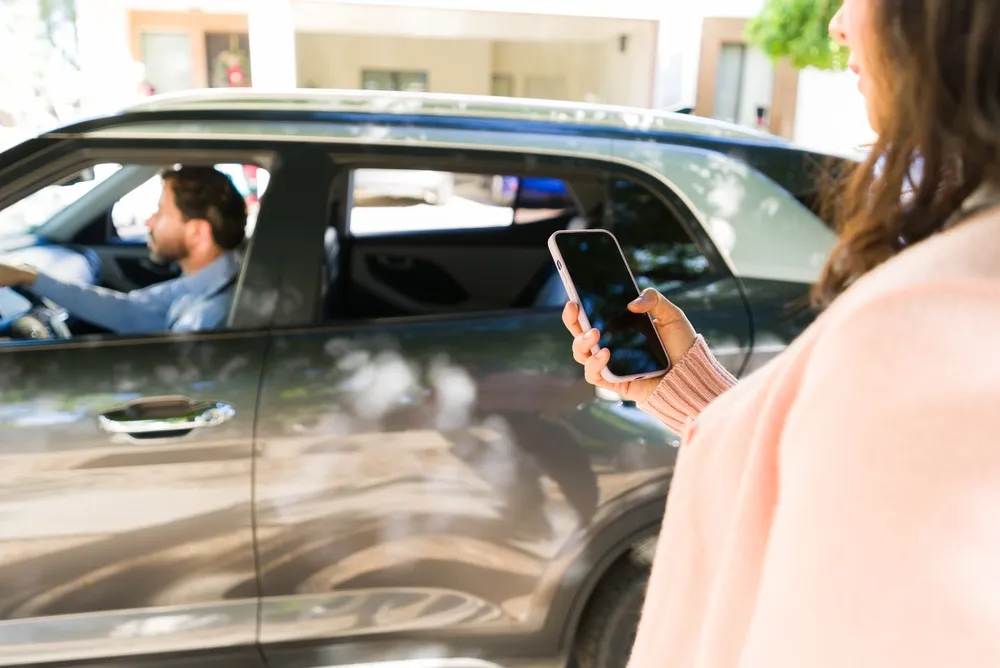
Remember when getting a taxi meant standing next to the road and hoping one would come past?
Now, you can be sitting at home, finishing dinner or walking out of a shopping centre, pull out your phone and have a car on its way within minutes.
It’s become so normal that it’s easy to forget how different it once was.
Ride-hailing apps have changed the way people get around South African cities. Uber and Bolt are now part of everyday life for many passengers, while a growing number of services have entered the market.
But the biggest change isn’t simply that we can order a car from our phones.
It’s that we’ve started to expect transport to work around us.
Your Ride is Already on Your Phone
Think about what happens when you book a ride.
You enter where you’re going, see how much the trip is likely to cost, watch the car move towards you and know who is picking you up before they arrive.
You don’t have to flag someone down.
You don’t have to wonder how long the journey will take.
And, when you arrive, you don’t necessarily need to reach for your wallet.
The entire process happens through the same device most of us already carry everywhere.
That convenience has become part of the appeal.
It’s Changed the Awkward Journeys Too
Some trips have always been a little difficult to plan.
Getting home after a late dinner. Catching an early flight. Going somewhere unfamiliar. Leaving a concert when thousands of other people are trying to find a ride at the same time.
Ride-hailing doesn’t make those situations disappear, but it gives people another option.
It has also become part of journeys that involve more than one type of transport.
You might take a train into the city and order a ride for the last few kilometres. You could catch a bus to one part of town and use an app to get somewhere that isn’t conveniently served by public transport.
The journey doesn’t always have to depend on one system anymore.
We’ve Got Used to Knowing Where Our Ride Is
There’s something else that has quietly changed.
We now expect to know where our ride is.
The little car moving across the map tells you that the driver is coming. A notification tells you they’ve arrived. You can contact them through the app if you can’t find each other.
Before ride-hailing, waiting for a taxi often meant simply waiting.
Now, we watch the journey happen on a screen.
Even the end of the trip has changed. You pay through the app, receive a receipt and rate the driver before moving on with your day.
It’s a small thing, but it has made the whole journey feel more connected.
It has Changed the Driver’s Side Too
The shift isn’t only about passengers.
Ride-hailing platforms have given drivers another way to earn an income, whether they’re driving full-time or using the flexibility of the platform to fit around other commitments.
But the flexibility comes with its own realities.
Fuel isn’t free. Cars need servicing. Tyres wear out. Insurance and other running costs still have to be covered.
So while the app makes it easier to find passengers, being a ride-hailing driver is still a business.
The technology may have changed how drivers find customers, but it hasn’t removed the costs of being on the road.
South Africa Already Had Plenty of Ways to Get Around
Ride-hailing didn’t arrive in a country where people were waiting for someone to invent a way to get around.
South Africans already had plenty of options. There are minibus taxis, trains, buses, metered taxis, private cars and, of course, walking when the distance allows it.
Ride-hailing has simply slipped into that mix.
For some people, it’s now the easiest option. For others, it’s something they use when the train isn’t running, they’re heading somewhere public transport doesn’t reach easily, or they’re leaving an event late at night.
Sometimes it’s not even the whole journey.
You might take the Gautrain into Sandton and order a ride for the last few kilometres. Or catch a bus into town and use an app to get home from there.
That’s probably what makes ride-hailing’s rise interesting.
It hasn’t replaced the ways South Africans were already getting around.
It’s just given people another option when they need one.
So, What Has Actually Changed?
Yes, you can order a car from your phone.
But think about everything else you now expect to happen around that ride.
You want to know roughly what it’ll cost before you book. You want to see the car coming towards you. You want to know the driver’s name and what the car looks like. And if you’re standing outside a shopping centre trying to find each other, you expect to be able to contact them.
Those things have become so normal that we don’t really think about them anymore.
They weren’t part of the experience before ride-hailing apps.
South Africa still has plenty of transport issues to deal with. An app isn’t going to solve traffic, make public transport cheaper or suddenly make every journey reliable.
But it has changed what we expect when we need a ride.
Not that long ago, getting a taxi meant finding one.
Now, for millions of people, it starts with a few taps on a screen.
And that’s probably the clearest sign of how much ride-hailing has changed urban transport.
It doesn’t feel like a new way of getting around anymore.
It just feels normal.